

The Sacred Mountain: Mount Paektu and Its Global Significance
Mount Paektu, a towering stratovolcano that straddles the border between North Korea and China, has recently been recognized by UNESCO as a Global Geopark. This designation marks a significant milestone for North Korea, as it becomes the first natural site from the country to be included on the prestigious list. The recognition highlights not only the mountain’s geological importance but also its deep cultural and historical significance within North Korean society.
A Symbol of National Identity
For North Koreans, Mount Paektu is more than just a natural landmark—it is a symbol of national identity and spiritual heritage. According to North Korean legend, the mountain is the birthplace of Dangun, the mythical founder of the first Korean kingdom. This mythological origin has been woven into the fabric of North Korean history, reinforcing the idea that the nation’s roots are deeply tied to this sacred peak.
The mountain also holds a special place in the history of the Kim dynasty. Kim Il Sung, the founder of North Korea, is said to have used the mountain as a hideout during his fight against Japanese occupation in the 1940s. His grandson, Kim Jong Un, has continued this tradition, often visiting the mountain before major political events. These visits serve as a powerful reminder of the family’s connection to the land and their role in shaping the nation’s narrative.
The Geological Marvel
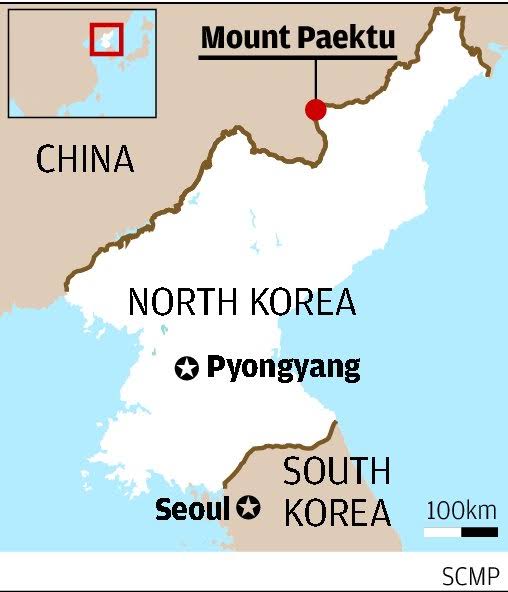
Beyond its cultural significance, Mount Paektu is a geological marvel. The mountain is an active stratovolcano, known for its dramatic eruptions and unique geological formations. One of the most notable events in its history was the “millennial eruption” in 946 CE, which is considered one of the most powerful volcanic eruptions in recorded history. This event left behind a caldera lake, Lake Chon, which sits at an elevation of around 7,200 feet above sea level.
The UNESCO Executive Board cited these features as key reasons for the mountain’s inclusion as a Global Geopark. The organization recognizes sites that demonstrate international geological significance and promote sustainable development. Mount Paektu’s valleys, shaped by glacial erosion, and its rocky plains contribute to its global appeal.
A Site of Global Recognition

The designation of Mount Paektu as a UNESCO Global Geopark comes after years of effort by North Korea to gain international recognition for its natural heritage. The country sought the geopark status in 2019, but the on-site inspection was delayed due to the COVID-19 pandemic. In contrast, the Chinese side of the mountain, known as Changbaishan, was designated as a geopark the previous year.
This recognition could open new opportunities for Mount Paektu as a destination for geotourism. While the mountain has long been a source of pride for North Koreans, the UNESCO designation may encourage the country to promote its natural wonders alongside its rich mythology. This could lead to increased engagement with the global community, although the extent of this impact remains uncertain.
A Journey to the Summit
Reaching Mount Paektu is no easy task. The journey requires navigating through remote farming villages and bumpy dirt roads, with access strictly controlled by the North Korean government. In 2017, I had the rare opportunity to visit the mountain from the North Korean side, accompanied by a group of Western journalists. The trip was closely monitored, but it offered a glimpse into how the regime uses the mountain as a symbol of national pride.
During the visit, we stood at the edge of Lake Chon, feeling the wind cut across our faces. It was a moment of profound reflection, as the sheer scale and beauty of the landscape reminded us of the mountain’s significance. Local guides shared stories of the mountain’s mythical origins, emphasizing its role as a sacred site for North Koreans.
The Legacy of the Kim Dynasty
The Kim dynasty has long used Mount Paektu to reinforce its narrative of power and legitimacy. The mountain’s peaks are emblazoned on the country’s national emblem, and its name is associated with everything from rockets to power stations. The concept of the “Paektu bloodline” is central to North Korean ideology, emphasizing the family’s noble and heroic lineage tied to the ancient kings of the Korean peninsula.
This belief in racial purity and divine right has been reinforced through state propaganda, which portrays the Kim family as the rightful leaders of the nation. For many North Koreans, the mountain represents the soul of Korea, a place where history and mythology converge.
A Moment of Unity
In 2018, North Korean leader Kim Jong Un brought then-South Korean President Moon Jae-in to the summit of Mount Paektu, marking a rare moment of unity between the two Koreas. The visit was seen as a symbolic gesture of reconciliation, with Moon expressing his gratitude for the opportunity to stand on hallowed ground. For many Koreans, reaching the summit has long been a rite of passage, but access has been restricted for most South Koreans.
Kim Jong Un has also been photographed riding a white horse up the mountain on multiple occasions, further cementing its role as a symbol of leadership and power. These images are carefully curated by the regime, reinforcing the mountain’s status as a place of both natural and political significance.
A Future of Engagement?
With the UNESCO designation, Mount Paektu is now recognized as a site of global geological value. Whether this leads to greater engagement with the international community or remains a tool for Pyongyang’s narrative is yet to be seen. For now, the mountain stands as a testament to the enduring power of myth, history, and nature.
As the winds blow across its slopes and the stories are passed down through generations, Mount Paektu continues to hold a special place in the hearts of Koreans on both sides of the border. For those who have stood at its summit, the experience is unforgettable—a reminder of the mountain’s timeless allure and its deep connection to the soul of Korea.
